Posts Tagged by biomass-to-energy
Take a COOL Guess – the Fun Quiz on Clean Energy Today’s Topic: Biomass
| February 27, 2011 | Posted by Craig Shields under Biomass |

Question: The dozens of flavors of biomass technologies are all rooted in making use of the chemical energy stored in the bonds of complex, organic molecules, which, in some processes, is released to reform biofuels, normally in the form of alcohol. What are the most common forms of these alcohols?
Answer: Can be found at http://2greenenergy.com/cool-guess-answers/8732.
Relevance: A number of 2GreenEnergy clients employ gasification technologies, using various combinations of temperature controls, catalysts, and metered introduction of oxygen to break down the biomass as cleanly as possible. Our favorite? Thermal anaerobic gasification, as represented by our client Resource Recovery Corporation, whose unique and patented process does not form carcinogenic clag as a byproduct.
Take a COOL Guess – the Fun Quiz on Clean Energy (and Global Warming Remedy). Today’s Topic: Babassu Trees
| January 30, 2011 | Posted by Craig Shields under Biomass |
Question: What is the babassu tree? What value does it offer?
Answer: Can be found at http://2greenenergy.com/cool-guess-answers/8732.
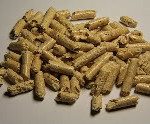
Relevance: One of our clients based in Portugal has a very carefully constructed business plan to grow babassu in Brazil, pelletize the fruit, and ship it around the world as an energy source.
Biomass To Energy — Current Report
| August 27, 2010 | Posted by Craig Shields under Biomass |
I just got a call from a gentleman from Montgomery Street Research who asked a very good question: Is there a single, current document that lays out the state of the art in biomass-to-energy? There are so many wrinkles to this, but principally, I suppose, these two:
* Dozens of different technologies – any one of which could be appropriate to a certain kind of site and feedstock.
* Different levels of commercial viability depending (obviously) on the cost of feedstock and the price of take-off — but also on government incentives that would tend to make a project this more attractive – or less so.
Occasionally I come across something that looks perfect, only to glance down and see that it’s ancient. Anything more than a year old, I would suggest, is probably out of date.
If anyone can point us in the right direction, that would be terrific.
Biomass-to-Energy: Renewable Energy in Tanzania

| July 20, 2010 | Posted by Craig Shields under Biomass |
Ever hear of a “Croton?” You know, the oil-bearing tree, indigenous to Tanzania? How familiar are you with babassu?
Don’t be ashamed if you’ve never heard of either. Besides the two people who brought me business plans that promote biomass-to-energy projects using the fruits of these two exotic trees, I’ve yet to run into a single person who’s ever heard of either one.
The former bears nuts about the size of walnuts; the latter, found primarily in another but equally wild part of the world (northeastern Brazil), provides something akin to a small coconut. Harvesting neither affects the world food supply, and both have characteristics that make them very attractive for biomass feedstock. Suffice it to say that 2GreenEnergy is a great place to work if you want to learn about life forms that you would have been extremely unlikely to come across in any other way.
More to the point, the people forwarding these two business plans are both fantastic human beings — engaged on incredible missions. Want a great experience? Talk to Joe Scali of African Biofuels and ask him about his plans for the Croton — actually Croton megalocarpus (locally called muhihi). This tree grows robustly in semi-arid climates on marginal lands, produces 25-50 kg seeds annually with 32% oil content. In a few minutes, you’ll get a background on a magnificent project — one that actually will, I’m completely convinced, provide a positive (if perhaps a bit longer-term than some) return on investors’ money. And you’ll be more than a little bit tuned into the what’s happening in Tanzania with respect to renewable energy.
The people of Third World countries contribute far less per capita to the production of greenhouse gases and other pollutants than those in developed nations. But they contribute far more per Watt-hour of energy consumed, since their access to energy tends to be rather low-tech, e.g., cooking over open wood fires.
So, for anyone wishing to make a difference, let me ask you, does it make more sense to improve the MPG rating of the cars we Americans drive a few percent, or eliminate 90+% of noxious emissions that come from the way of life of an equal number of Africans? If you’re interested, go to the African Biofuels website, and talk to Joe. Tell him Craig sent you.
Biomass in the News
| October 19, 2009 | Posted by Craig Shields under Biomass |
Stephen Lacey does a wonderful job in his podcasts for Renewable Energy World, and, I think, covers a multitude of subjects comprehensively and fairly. This week, he pointed out that feed-in tariffs (incentives for utility customers to put renewable energy back onto the grid) have been effective around the globe in spurring on the development of a great number of different technologies. He went on to note that biomass thermal is a viable, commercially ready technology, and deserves same set of incentives that are according to solar, wind, etc.
The federal government abandoned algae-based biofuels in the mid-1990s, but seems to have come around on the issue. The Department of Defense recently gave Solazyme several multi-million dollar contracts to supply jet fuel. Solazyme grows algae in the dark, feeding it with a variety of biomass stocks, and converting the sugars to oil.
The company claims that this process is 1000 times more efficient than growing algae in sunlight. But isn’t it hard to really fall in love with renewable energy technologies that wind up burning hydrocarbons? If we’re going to do this, isn’t it better to concentrate our efforts on technologies like solar, wind, geothermal, etc. that don’t involve carbon emissions? I really don’t see where the passion for biomass comes from.