
Posts Tagged by David Mills
New Partner in Portugal: Sun Business Development
| August 23, 2010 | Posted by Craig Shields under Solar Thermal |
I just got off the phone with an extremely professional company in Portugal with which 2GreenEnergy will be partnering to deliver renewables consulting and EPC (Engineering, Procurement and Construction) projects for our clients.
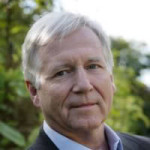
You’ll travel a long way to find a group of people with a deeper background in the guts of what makes large projects – especially CSP (concentrating solar power) work. Coincidentally, my main contact, Agostinho Miguel Garcia, knows David Mills, co-founder and chief scientist at Ausra – whom I interviewed for my book’s chapter on the subject. Check them out here.
I always expect the Portuguese to speak a number of languages, but this guy exceeded my expectations there too – a total of six including Mandarin. Holy smokes.
About David Mills, Contributor to “Renewable Energy Facts and Fantasies” – Solar Thermal
| August 1, 2010 | Posted by Craig Shields under Solar Thermal |
Dr. Mills, known worldwide for pioneering Compact Linear Fresnel Reflector (CLFR) technology and for his work over the past 30 years in non-imaging optics, solar thermal energy, and PV systems, contributed to the book’s chapter on solar thermal.
This chapter addresses the notion of scale. Dr. Mills believes wind and solar can all scale to be very large; each of them has the capability to take on the entire electricity load. But the question is how much does that cost and do they do it in a way where we have reliable energy?
Hybrid of Public/Private Financing for Renewables
| March 8, 2010 | Posted by Craig Shields under Renewables - Business |
I wrote not too long ago about the huge, long-term role that the National Renewable Energy Laboratory (NREL), as part of the Department of Energy, plays in supporting the development of clean energy technologies. Their work with solar energy leader Solyndra is a perfect example of a case in which this public support made it possible for a private company to raise critically important addition capital, by preventing their initial private investors from getting scared away. At a certain point, new (very large) rounds of cash were required to get the company to its next level. As I recall, NREL supported this effort to the tune of over $700 million — and this robust commitment showed investors that they weren’t alone in their belief that the company was on the right track.
But not every company that asks for money receives any at all — let alone $700 million. So exactly how does this process work? How fair is it? What criteria are most important? What types of companies are favored over others, and why? Are more mature renewables technologies, like photovoltaics (in which Solyndra plays), favored over newer ideas? (Solyndra has a very well proven breakthrough in deployment of CIGS (copper indium gallium (di) selenide), generating a significant leap in PV efficiencies and reduction in costs).
Unfortunately, it’s not clear. I suppose it’s not supposed to be. Take solar thermal/CSP (concentrated solar power) as an example of a new technology. Technologies like PV and wind have a several-decade head-start over CSP. When I interviewed industry leader Ausra‘s founder Dr. David Mills for my book on renewables, he told me that Ausra had gotten to the second round in one of these mega-contests in which the DoE selects its favorites to back, but that they didn’t make the finals. When I asked if he resented their decision, he — perhaps simply out of good sportsmanship and professional courtesy — said that he didn’t, and told me that he’ll simply try again another time.
I can’t count all the people who have asked us for our insights at 2GreenEnergy on this matter — and I regret that all I can turn up are anecdotal incidents like these. I ask readers to share their own experiences with this process so that all my learn. Thanks.
Solar Thermal – Ausra Sold! – More Discussion
| February 12, 2010 | Posted by Craig Shields under Solar Thermal |
More on my coversation with John Hugo on solar thermal, who writes:
Craig: I agree, could not have said it better re: nukes.
Re: the capital intensity of solar thermal, I don’t have a cost estimate on the power block from them and turbine procurement appears to be a problem according to them. But the cost of the mirrors etc. is $99 million for 50 MW pls the power block costs. This compares to $4/watt for PV, or $200 million.
Their system also allows for a gas assist that can run after the sun goes down or during low sun periods. That can add another 25% to capacity and which has the fuel costs of gas, but that’s the same as other gas systems in place now. Better than coal or nukes?
To which I replied:
Dr. Mills, Ausra’s founder, declined to talk (to me, at least) about the cost per Watt, even though I fairly well grilled him on the subject. Perhaps he was just being coy, but according to what he said, the price of steel is incredibly important in making this determination, and that this fluctuates greatly.
Personally, here is what I suspect. An extremely important aspect to keep in mind is that, unlike say wind, the efficiencies of solar thermal are improving every month. As you’ll see in my book’s chapter on the subject (scheduled to be published in March), there are four essentially different technologies here. Dr. Mills declined to say too much about exactly what he’s doing, but it was clear that he was pretty excited by it. The only hint he gave me was that it had to do with bringing a high-temperature (thus high-efficiency, per the principles of thermodynamics) solution to a technology that had previously been thought of as low-temperature.
I’m quite confident that Dr. Mills and his colleagues will be continue to be extremely active in the business; his passion for it is obviously sincere. And I, for one, believe he’s barking up the right tree in terms of a true and comprehensive solution for the world’s energy needs.
Renewable Energy and Morality
| January 8, 2010 | Posted by Craig Shields under Renewables - Politics |
In the talk Dr. David Mills gave recently in on solar thermal, he closed by telling his audience that renewable energy was “a moral issue,” meaning, of course, that we as a species have a series of related ethical obligations regarding our environment. When I put this together with the ideas of some other people I’ve interviewed for my book on renewables, I arrive at a considerable laundry list of clear consequences of pursuing the status quo in terms of power generation and consumption:
Increasing rates of serious diseases directly and indirectly caused by fossil fuel extraction, refinement, distribution and combustion
Suffering of other animals brought about by reduction in habitable areas, food supplies, and accelerated extinction of species
Storms, droughts, and famines associated with global climate change
Destruction of crustaceans and associated ecosystems due to ocean acidification
Increased violence from terrorist groups and rogue states empowered by wealth derived from oil
Reduced quality of life for our descendents
Social chaos engendered by imminent gasoline shortages
In my talk yesterday with Matt Simmons of “peak oil” fame, he pointed out that social chaos will ensue as oil becomes scarce and gasoline becomes unavailable in an increasing number locations over increasingly long periods of time. I asked Matt, not generally known for his rose-colored predictions of the future for an oil-addicted world, for a solution. To my surprise and delight, he provided one without a moment’s hesitation. More on this tomorrow.
Solar Thermal Pioneer – Dr. David Mills
| January 4, 2010 | Posted by Craig Shields under Solar Thermal |
Dr. David Mills, founder and chief scientist of solar thermal leader Ausra, was generous enough with his time to help me with the chapter on concentrated solar power in my upcoming book on renewables. I happened to be watching this lecture he gave recently in his homeland (Australia) which I heartily recommend. It is entirely non-technical and accessible to anyone, while providing a worthy history of renewable energy – as well as a solid, well-reasoned direction for the future.
In it, he speaks about the safety and overall viability of nuclear energy, and provides essentially the same one that I always do: we already have a huge fusion reactor with an endless supply of fuel, no problems with operational safety, no million-year hazard associated with storing spent fuel, and no open invitations for terrorists or rogue states to attack, or use the technology to build bombs. It’s called the sun. Best of all, it’s separated from the Earth’s surface by a distance of 93 million miles – which is perfect; it’s far enough away to be safe, while close enough to provide us with more than enough clear power — insofar as we need to harvest only one out of every 6000 photons that is received at the Earth’s surface in order to address all the needs of all 7 billion of us.
This may sound like a flippant answer, but I don’t believe it to be. The cost of reaping this power is coming down every month. If we retain our focus on perfecting a few technologies for capturing that energy; we’ll be there very shortly. I urge readers to learn about solar thermal; I know you’ll share in my optimism.