Posts Tagged by paradigm shift
The Ultimate Christmas Present: A Paradigm-Shift in the Way We Settle Our Differences
| December 14, 2011 | Posted by Craig Shields under Sustainability |
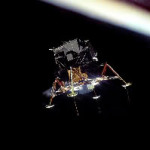
At the conclusion of the last moonwalk that took place on this date in 1972, the astronauts unveiled a plaque, which read: “Here man completed his first explorations of the Moon, December 1972. May the spirit of peace in which we came be reflected in the lives of all mankind.”
That’s beautiful writing, and causes one to wonder how it’s possible that war is such an omnipresent reality here on Earth. Maybe it’s that we seemed so divorced from its horrors; it’s something that just rolls along, with skirmishes that are hardly newsworthy, taking place in some foreign land, affecting people we don’t know. Thus we “support our troops,” meaning (to most people) we “support the war effort.”
At a certain point, perhaps people will simply change their minds, and tell their leaders, “No, I don’t support this – even a little bit. Make this stop, or start looking for a new career.” Until then, war, supremely profitable, will remain our paradigm for settling differences.
Related posts:
Paradigm Shift in American Consumers’ Driving Habits
| April 6, 2010 | Posted by Craig Shields under Renewables - Business |
Craig Shields predicts a paradigm shift in American consumers’ driving habits, based on increasing sensibilities re: sustainability. Citing the backlash against the fur industry in the 1960s, Craig predicts a larger-than-expected demand for electric vehicles based on his belief that people are re-thinking their identification of themselves with the car they drive.
Related posts:
Paradigm Shift in Driving and the Electric Vehicle Adoption Curve
| March 1, 2010 | Posted by Craig Shields under Electric Vehicles |
Yesterday, I wrote a post featuring a video on our driving habits and how they’re likely to change, given our newfound spirit of environmental stewardship. It seems that more and more of us every day are ceasing to define ourselves in terms of the cars we drive, as we’re realizing that our love for the zoom and sex appeal of internal combustion engines is a selfish and shallow thing — and not a part of who we really are.
I compared this phenomenon to wearing fur coats. They feel good, they keep you warm, and they tell the world that you can afford the best. But they come at the expense of incredible cruelty to the animal kingdom. One morning a few decades ago, we woke up, smacked our palms against of collective foreheads, and decided that this was simply not acceptable behavior for civilized people.
I believe the same epiphany is right around the corner in transportation. Here’s the video.
Related posts:
Paradigm Shift in Driving and the Migration to Renewable Energy
| February 28, 2010 | Posted by Craig Shields under Electric Vehicles |
I started to write a blog post on this subject: how our appreciation for clean energy will cause a shift in our relationships with the cars we drive. Then I decided to make short video out of the concept. I hope it’s of some value.
Related posts:
OK, the Conservation of Energy Isn't a "Law." But Can I See a Working Model of a Counter-Example?
| September 20, 2009 | Posted by Craig Shields under Renewables - Science |
I know this is hard for us guys schooled in the “old” physics thinking, but the longer I investigate and experiment, the more anomalies I turn up regarding accepted physics “laws.” Remember, it was impossible for man to fly with his own body power — until somome flew accross the English channel. Remember the sound “barrier”? Travelling to the moon was a permanent science fiction.
Great points, all. It’s funny; I had just written a piece advising the authors of business plans to “keep it real,” in which I explain: if you’re going to challenge conventional wisdom, do it convincingly. I review submissions for what are essentially perpetual motion machines at the rate of about one per week. And by the way, I read each of them carefully and with no derision, because I’m sure that eventually, mankind will come to an understanding of the cosmos that will make all us 2009 people look quite foolish, as paradigmatic breakthroughs have been doing since the dawn of civilization. Having said that, understand that if your invention suggests 1 Watt in and 2 Watts out, you’re presenting this idea to people who have been taught since they were babies that you’re a liar or a fool.
I believe that many of the so-called laws will, in fact, be broken. Yet I have trouble believing that somewhere, right now, there is a machine that is running above 1.0 efficiency, based on a principle that no one can explain. Sorry to sound cynical, but I need to see it.
I’ll make you a deal: If you can give me clear reason for hope that I can see the first working model of such a device, I’ll take my wattmeter (to support my skepticism) and a bottle of really good champagne (to celebrate the gift to the world if I’m wrong) anywhere in the world for the demonstration.
Again, I hope we can keep the dialog open. I know that there are many people who are far more ardent scientists than I who will be thrilled to know that legimate science has broken yet another “law.” Please keep me informed.
Related posts:
Energy-Related Paradigm Shifts
| September 2, 2009 | Posted by Craig Shields under Electric Vehicles |
I’m pleased to see that blogger Frank Eggers has become active here, who writes:
As one of the comment-posters stated, too little attention is being given to reducing the need for driving . . . With better urban planning, people could often walk where they need to go, ride a bicycle, or use public transportation. But with scattered development, public transportation cannot be made efficient.
This is all true. And I do think I see the seeds of this thinking in young people leaving college with the relevant degrees to get into this subject professionally. Clearly, however, such change will be a long time in the making.
Another issue slowing down the reduction in driving is simply individuals’ resistance to change. I’m reminded of Thomas Edison, who, when he introduced alternating current in the late 19th century, recognized that it represented a scary paradigm shift for American consumers, and wanted to “mess with” that paradigm as little as possible. So, to suggest a way in which electricity could replace gas for room lighting, he put his new lights in the wall sconces where the gas lamps had been. Previously, one could only light a room from the walls, since gas lamps on the ceiling would have brought the whole place down in flames. Even though Edison wished he could show the world a breakthrough in illuminating a room with the more practical and effective ceiling lighting, he wanted to introduce no more change than was absolutely necessary.
My point here is that the best ideas of the generation and use of energy are those that call upon people to make the least change in their attitudes and behaviors. This, btw, is my chief concern about the Commuter Car in the previous post; it calls upon the automotive consumer to make a radical shift in perception, and it’s unclear to me how that will be embraced.