Posts Tagged by terrorism
Ocean Thermal Energy Conversion — Good Example of a Stalled Technology
| April 26, 2012 | Posted by Craig Shields under Ocean Thermal |
Here’s a piece in The Economist on ocean thermal energy conversion (OTEC) that points out the sad truth about the development of alternative energy technologies, i.e., that interest is strong when oil is expensive, but wanes to zero when oil prices fall. Witness the U.S. response to the oil embargoes in the 1970s, and the near-immediate abandonment of all that when it appeared the crisis was over. And, of course, the story repeats itself into the 21st Century with our current “drill baby drill” mentality Read More
The U.S. Has a Responsibility At This Point In History
| December 20, 2011 | Posted by Craig Shields under Fossil Fuels |

Bill Moore, editor of EVWorld.com has written a splendid article on the failure of certain of the early electric vehicle companies, in which he points out:
Breaking into the automotive business can be relatively easy; making a success of it is pretty damned near impossible, regardless of what type of propulsion system you favor: ICE-age or otherwise; and it’s especially tough if you decide to go electric. Beyond this, the reasons for individual failures are myriad and multiple: right product, wrong time, wrong product; wrong time, etc. Management missteps, unrealistic investor expectations and impatience, government responsiveness, inept marketing, unanticipated technical setbacks, product shortcomings, public resistance to change: the list is long.
I don’t dispute any of this, but let’s look at the subject from a “big picture” perspective. As a country, we’re still married to fossil fuels, and we’re doing essentially nothing about it In particular, we have no energy policy. Hell, we’re about to build an oil pipeline Read More
2GreenEnergy Heads East
| January 11, 2010 | Posted by Craig Shields under Renewables - Business |
As I mentioned, I’m spending the week in New York City and Bermuda this week for a string of meetings that I believe will ultimately bring a great deal of additional value to that which 2GreenEnergy offers its readers and clients.
I landed in Philadelphia last night to spend some time with my parents and brother’s family before these meetings began. Driving around, listening to the radio, talking to people, and re-acquainting myself with the flavor of the area in which I grew up gave me a renewed appreciation for the scope of the task facing proponents of clean energy — it’s not at the top of the list of things that occupy people’s attention here. In fact, very few conversations, advertisements — anything — focus on environmental topics. A traveller’s tip for those wishing a sure winner as a subject of discussion: the terrible danger represented to us all by the recent failed terrorist attack.
Solar Thermal Pioneer – Dr. David Mills
| January 4, 2010 | Posted by Craig Shields under Solar Thermal |
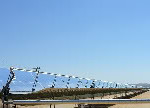
Dr. David Mills, founder and chief scientist of solar thermal leader Ausra, was generous enough with his time to help me with the chapter on concentrated solar power in my upcoming book on renewables. I happened to be watching this lecture he gave recently in his homeland (Australia) which I heartily recommend. It is entirely non-technical and accessible to anyone, while providing a worthy history of renewable energy – as well as a solid, well-reasoned direction for the future.
In it, he speaks about the safety and overall viability of nuclear energy, and provides essentially the same one that I always do: we already have a huge fusion reactor with an endless supply of fuel, no problems with operational safety, no million-year hazard associated with storing spent fuel, and no open invitations for terrorists or rogue states to attack, or use the technology to build bombs. It’s called the sun. Best of all, it’s separated from the Earth’s surface by a distance of 93 million miles – which is perfect; it’s far enough away to be safe, while close enough to provide us with more than enough clear power — insofar as we need to harvest only one out of every 6000 photons that is received at the Earth’s surface in order to address all the needs of all 7 billion of us.
This may sound like a flippant answer, but I don’t believe it to be. The cost of reaping this power is coming down every month. If we retain our focus on perfecting a few technologies for capturing that energy; we’ll be there very shortly. I urge readers to learn about solar thermal; I know you’ll share in my optimism.
Interview with James Woolsey
| December 10, 2009 | Posted by Craig Shields under Renewables - Politics |
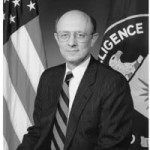
The trajectory for completing my book on renewables just received a major shot in the arm this morning as James Woolsey, one of the most vocal and credible proponents of alternative energy, agreed to an interview for my chapter on oil independence and national security. Mr. Woolsey’s role as Director of the Central Intelligence Agency from 1993 to 1995 was one of his four Presidential appointments across two Republican and two Democratic administrations. In my mind, he is the best-qualified person on the planet to speak to these issues.
Over the past few years, I’ve availed myself of a great deal of Mr. Woolsey’s writing and speaking, so I can anticipate what I think he’ll probably say on these issues – the manifold threats to US interests that oil addiction represents: the funding of enemy states, possible terrorists strikes, embargoes, and other potential disruptions in supply, the economic duress created by our borrowing $2 billion per day, etc. I also expect to hear about the remedies – many of which I’ve tried to cover in this blog over the past many months: alternative fueled vehicles (especially electric transportation) and renewable energy.
The current “debate” about global warming underscores the importance of having people like James Woolsey present in our world – people who cut through the political gamesmanship that is so common in public discourse, dispense with opinion and rhetoric, and focus on hard-hitting, well-researched facts. I eagerly anticipate the conversation.
Terrorism and Oil
| September 6, 2009 | Posted by Craig Shields under Renewables - Politics |
I happened to run into one of the most interesting people I could have hoped to meet at a chili cook-off I attended over the weekend: a university professor whose focus is hosting seminars on terrorism for graduate students. I spoke with him for over 30 minutes, hanging on every word. Here I bring you the basic ideas he communicated:
Terrorism, of course, is a tactic. It makes no sense to say you’re waging a “war on terrorism” any more that one would say you’re waging a “war on hand-grenades.” This use of language to pander to the masses represents the depths to which the US has fallen in the integrity with which it thinks and communicates.
One can’t fully address the terrorism that we see from Muslim Fundamentalists with a war of ideas. Yes, we can make the situation worse with the missteps of the warmongerish Bush Administration that has fostered Al Qaeda recruitment by creating intense hatred for the West. The Muslim world itself must iron out its own differences, and history has shown that this is a monumentally difficult thing to do. In any case, the challenge is not amenable to something like an advertising campaign from the West.
The real issue is the fanaticism of certain people who have risen to lofty places, having become highly respected by certain groups of disenfranchised Muslims. Extremist movements that have any chance of success almost always are derived from alienated people from privileged backgrounds. Peasant movements are normally squashed immediately, because they are the product of poor, uneducated people rising up in spontaneous anger with no real planning and foresight, and thus are usually crushed immediately by those in power. The privileged few, by contrast, have the education, as well as the time on their hands, to think through exactly what they are doing, what they feel their ideals ought to be, how they should recruit, raise funds, promote, operate, etc. This is the case with Al Qaeda.
I asked why this extremism isn’t attached to all monotheistic religions – why it doesn’t arise anyplace in which one group of people has the belief that “their God is better than someone else’s God.” He told me that indeed there are extremist Christians, trying to establish a theocratic United States, for example, but they’re generally regarded as the lunatic fringe, and they gain no traction.
When I asked why theocratic Christians fail, where Muslims succeed, he offered two explanations that I found fascinating:
a) Like the Old Testament and the New Testament in the Bible, the Koran has a new and an old part. However, unlike the Bible, where the angry, vengeful God of the Old Testament is replaced by the loving God of the New Testament, the case with the Koran is the reverse. During Mohammed’s life, his early followers were first at Mecca, and, though they were oppressed, things were generally hopeful, and thus the tenor of the religious scripture was one of peace and tolerance. Ten years later, they were forced to fight, and wound up at Medina. They survived the fight, and thus took away a kind of “bring it on” mentality. As a consequence, the writings that found their way into the Koran were generally bellicose and intolerant of “infidels.” And today, the interpretation of the Koran includes this idea: where there appears to be a contradiction between the old and the new, the new is to take precedence.
b) The Western world had its Age of Enlightenment, its French Revolution, and its US Constitution, all serving to divide church and state. And even our Bible contains passages that serve to tell us to separate religious from public matters, e.g., Matthew 22:21 in which Jesus said, “Render to Caesar the things that are Caesar’s.” There are no analogies in the Muslim world. The idea of a theocracy is an intrinsic part of the way Muslims think. While it’s true that certain Muslim nations tend to be stricter about the way Islam is imposed on all aspect of its citizens’ lives, the idea of a secular government really has no legs on which to stand.
You may be wondering why all this history has made it into a blog on renewable energy. Here’s your answer:
I asked, “Well let me ask you about the money that forms the power to make this all happen in the first place. I suppose this is really about oil. It would seem to me that, if it weren’t for the unfortunate geologic accident that these countries happen to be sitting on a large portion of the world’s oil reserves, we wouldn’t be having this conversation. They would be even more completely marginalized, and no one would care.” He believes that this is precisely correct. The only force making any of this relevant in today’s world is oil.
He wonders why a US government that is concerned about its own security is not doing everything it can to move away from oil. To him, it’s a complete mystery. I’m out of answers there too.